
How fracking paved the way for epic geothermal growth
Follow on


Share


About the episode
For decades, geothermal energy was limited by geography. Developers could only drill where hot water or steam was trapped beneath the earth’s surface.
Enhanced geothermal systems (EGS), however, revolutionized the industry by harnessing the oil and gas fracking playbook. EGS operators blast specialized fluid into hot, dry rock, fracturing it to produce huge amounts of heat. It’s a technology that has opened the door to utility-scale geothermal generation in a wide range of locations.
No company has found more success in EGS than Fervo Energy. Since launching its pilot, Project Red, in 2023, Fervo has made enormous strides. Drilling times and costs have already plummeted, and their first utility-scale project, Cape Station, began producing power in Utah this September. Fervo has signed power purchase agreements with customers including Google, Shell, and Southern California Edison, and they’ve announced two additional projects. This spring they went public at a valuation of $7.4 billion.
In this episode of Critical Capital, Alfred Johnson sits down with Sarah Jewett, the COO of Fervo. They unpack EGS’ remarkable, modular technology, as well as the company’s strategy for diversifying its customer base beyond hyperscalers. They also dig into permitting reform’s potential to supercharge the sector.
Critical Capital is a co-production of Crux and Latitude Studios. Learn more about how Crux is financing the future of energy.
Episode transcript
Sarah Jewett: And the whole reason that Fervo exists is to open up the geographic aperture of geothermal. I am not looking to develop in Utah and Nevada for the rest of my life here. There is a huge amount of demand in Utah and Nevada, but we believe at Fervo that this could be a global resource because we're pulling the cost down so much that it will be cost-competitive in many different geographies.
Alfred Johnson: For decades, geothermal energy's potential was limited by geography. Developers could only drill where hot water or steam was naturally trapped in the rock. Then came enhanced geothermal systems, or EGS, and the playbook changed completely. Unlike conventional geothermal, EGS borrows straight from the oil and gas sector. Operators blast high-pressure, specialized fluid into hot, dry rock thousands of feet beneath the ground, fracturing it to create a reservoir. Water then absorbs the heat and returns it to the surface to drive a turbine. Because it doesn't depend on natural hotspots, EGS can unlock clean 24/7 power in previously untapped places.
There are a number of innovative companies active in the EGS space, but only one has delivered the technology at utility scale, and that's Fervo Energy. Fervo began its commercial operations at Project Red, which was a pilot in Nevada in 2023. From there, it scaled fast. Its flagship facility, Cape Station in Utah, is slated to deliver roughly 500 megawatts once it reaches full capacity in 2028. Not bad for beginning operations this September. Drilling times and costs have already plummeted, and major buyers from Google to Southern California Edison and Shell have signed power purchase agreements. This May, Fervo went public at a valuation exceeding $7 billion, and with two more projects in the works, Fervo is showing no signs of slowing down.
Sarah Jewett: We like to say at Fervo that we are running the shale playbook, but 20 years later with the answer key.
Alfred Johnson: This is Critical Capital.
I'm Alfred Johnson, the CEO of Crux. We're the capital platform for clean and critical infrastructure. My guest today is Sarah Jewett, the COO of Fervo Energy. Like EGS technology itself, Sarah got her start in the oil and gas sector. Today, she helps Fervo scale its early pilot tests into utility-scale reality. In our conversation, Sarah and I discuss how her background in oil and gas shaped her work at Fervo, how the company has diversified its customers beyond the AI boom, and how permitting reform would make EGS generation even more predictable.
Sarah Jewett, welcome to Critical Capital.
Sarah Jewett: Thank you so much. I am so happy to be here.
Alfred Johnson: It's awesome to have you. We're going to talk a lot about geothermal, but I actually want to start by not talking about geothermal at all. We're going to start by talking about oil and gas. You started your career in the oil and gas fields, which is relevant because the technology that geothermal uses draws on a lot of the lessons learned from fracking. Tell us how your early experiences in the fields have influenced the way in which you've thought about this opportunity.
Sarah Jewett: Yeah, you bet. I think we've learned at Fervo that many good stories start in the oil and gas industry and translate well into geothermal, and mine is no exception. So, when I graduated from Dartmouth with my mechanical engineering degree, I made a move — much to the shock of my parents and friends and classmates — I moved out to Rock Springs, Wyoming, and joined a traveling hydraulic fracturing crew with Schlumberger. My first shift was a night shift in the Jonah Field, and I thought, "Wow, this is both so perfect, and what have I done?"
Alfred Johnson: Tell me about what led you to geothermal as an area of interest.
Sarah Jewett: Yeah, that's right. The story really starts in college. I was pretty laser-focused on ending up in clean energy, and I logged a slew of clean energy internships. And then for my last internship, I thought, "Oh, why not? I'll work in oil and gas and really understand the dark side of energy, and then that will help arm me with better information to go start my career in clean energy." So I went to work for a small oilfield services shop in Houston, and I had a blast. They sent me out to workover rigs in Midland, Texas; they sent me to artificial lift assembly shops in Sand Springs, Oklahoma; and I was just happy as can be.
And I thought to myself, "This industry can offer really hands-on learning, and I will get to deploy engineering knowledge, I'll get to learn about logistics, people management, all these different things." I got convinced: "I'm going to go work in Schlumberger's engineer rotational program for a couple of years," and they totally sold me on it. And I flew up to Nisku, Alberta, and had my interview, and I said, "This is definitely where I want to work and launch my career." And so I did it.
And man, my time in oil and gas was just awesome. I can't say enough things about it. Some of it is Type 2 fun — looking back on it now, it was the greatest experience of my life — and some of it, of course, probably was not so rosy at the time. But when I left there to go get my MBA, I really thought, "Man, it would be cool to capture a lot of the learnings and a lot of the things that I've experienced at Schlumberger, both from fieldwork and from subsurface understanding, when I go into clean energy."
I didn't quite find that when I was in my MBA, so I joined back up with the oilfield service industry and kept my eye on the market, was really looking around, and finally started hearing about these innovative subsurface companies that were deploying similar technologies to what had been deployed in shale, but for the purposes of clean energy deployment. And I just thought, "Oh, man. If I can deploy my skills here, this is going to be a perfect fit for me," and here I am.
Alfred Johnson: Okay, so you're basically in an episode of Landman. You go to business school, and then you come out the other side and go back into the oil and gas industry briefly, and then meet up with Tim Latimer, who had started the company in 2017. And I heard this amazing story from Tim at one point of how you came to acquire hundreds of thousands of acres of leases in the West at something like $4 on average per acre. I think now some of that acreage trades at hundreds of dollars. How did you pull that off?
Sarah Jewett: Yeah, so talk about an episode of Landman. Here we are in early 2017, the landmen of geothermal.
Alfred Johnson: That's Season 4.
Sarah Jewett: But really, we like to say at Fervo that we are running the shale playbook, but 20 years later with the answer key. And so there are pieces of the shale strategy that were very easy to adopt when we were crafting our strategy at Fervo. A lot of that has to do with learning curves and repeated deployment.
Another one that was really informative in our early strategy was: we believe the technology is going to work. We believe the technology is based in physics, we're going to deploy it, it will eventually work, and when it works, we want to have already picked up all of the best places to deploy the technology that we possibly can at a time when no one else cares about that land and it's really very cheap. And so that is what the founding team started to deploy in 2017. They said, "We are going to go at the market with a geologic layer. We're going to go find the highest quality geothermal acreage, and we're going to overlay a commercial layer on top of that. It has to have some believable delivery pathway to a customer, and if it has that, we're going to go ahead and we're going to buy it." And so we did, and we find ourselves today with a pretty massive leased acreage portfolio, and a lot of that is really, really high-quality acreage.
Alfred Johnson: How much, Sarah, is the supply chain for geothermal different or similar to fracking? Is it more or less exactly the same, or are there specialty components?
Sarah Jewett: It's incredibly similar. So you should bifurcate how you think about our business. We have the subsurface portion, the geothermal extraction portion, and then we have the surface portion, which is buildout of power plants and transmission lines. And when you look at the subsurface portion, the supply chain is incredibly similar to the oil and gas industry with a couple of key changes: we're operating at higher temperatures; we're operating often at wider diameters. And these are things that we've gotten to incrementally because we've always said that we will use off-the-shelf technology so that we don't have to go invent a tool to enable the geothermal energy to be extracted.
That's actually why you saw our early developments were 375 degrees Fahrenheit, and then we inched up the temperature and were developing at 400, now developing higher than that. And that is because we are following the high-end rated temperature window of all the tools and technology that exists. And then a lot of our suppliers have come along with us and said, "Okay, we now believe in Fervo's story, and we're going to help upsize something, or we're going to help increase the resiliency by deploying a different material to be more resilient at a higher temperature." And it's been a really, really productive R&D journey with our supplier partners.
Alfred Johnson: You've also made a big bet on modularity. Can you say why that's so important?
Sarah Jewett: Yeah, absolutely. So this is a big learning from the shale playbook: when any operator entered a shale basin, their most expensive wells were the first wells that they drilled. And then over time, they learned the resource, they set up infrastructure that shared over a higher volume of operational activities, they learned the resource better and better and better to the point at which they're focused on every minute of productivity in these wells. And so we knew that that was part of the playbook, and we said, "If we're going to reduce the cost of geothermal energy, repeatability is going to be a big part of our scale."
And so that is what we've done. We have built wellfield development plans that have highly repeatable models so that we can drill well after well after well after well and not have to redesign it every time, and therefore pull cost out of it.
Alfred Johnson: How did you start to find the places where you would really invest and start to build the projects?
Sarah Jewett: Yeah, so this is a capital-intensive business, and when you are trying to prove that a capital-intensive business works, no matter how much you believe the technology works, you have to convince people that it works by going through a little bit of milestone-based work. And so the way that I would characterize the early days of Fervo is increasingly expensive and complex deployments. First, on the desktop modeling. Next, we did a four-stage stimulation on an existing, highly deviated well. And then we said, "Okay, that worked really well. Now we're actually going to go drill our own two-well system to build the minimum viable product of a unit of a radiator that we will eventually go repeat over and over again."
So we went — and this was actually at the same site where we did our four-stage hydraulic fracture on an existing well — and built what ended up being a three-well system, because it was two horizontal wells and a single vertical monitoring well. And we drilled and fractured those wells and proved that you could actually flow and extract heat from that resource, and that is what we call Project Red.
We said at the time, "Okay, we're going to go deploy capital to build this. It can't just be a technological pilot; it also needs to be a commercial pilot, because if we do a technological pilot and then move to try to make it commercial, that's too many steps." And so we went out to sell it to the market and say, "This is a first-of-a-kind technology demonstration, and we need to find a buyer." And Google ended up signing up as the buyer for that project. And as we built that project and we proved that the physics worked on that level, we said, "Okay, now this green-lights us to go build a large greenfield development."
So that's what we're doing today. We just announced that we brought online our very first commercial-scale power plant last month, a 33-megawatt power facility in Southwest Utah. That is the first of what will become many, many power plants deployed at the same site at Cape Station.
Alfred Johnson: Cool. So Project Red comes online in Nevada in 2023. Then your first big utility-scale project, Cape Station, started producing power. What did you learn from Project Red about how to bring down the cost curve on subsequent projects that you brought into Cape Station?
Sarah Jewett: Yeah, well, it's interesting because the way you ask the question, Project Red, as a minimum viable product, in its design was not meant to be really repeatable. We wanted to build a system that we could learn a lot from and then go repeat writ large to actually achieve the learnings. But we had seen in shale, "Oh, learnings are available to us." And if you look at every operator in every shale basin in the United States, they start with high-cost wells, and over time, by increasing the productivity of those wells, smoothing their fixed costs over a larger volume of operational activity, and learning about the resource, they end up getting those wells down from a cost perspective over time to the point where when I was in the oilfield, we were trying to eliminate minutes of nonproductive time. And that was sort of boring from a fracturing perspective, but now I'm totally excited by the idea of eliminating minutes from our nonproductive time schedule.
And so we knew that it could be done. At Project Red, we were only drilling two wells that looked alike, and so we knew we would have to extend into a greenfield development in order to really achieve those learnings. Now, we saw some pretty big efficiencies from well one to well two at Project Red, but it wasn't until we really started drilling the third, fourth, fifth, sixth, seventh, to 10th, to nth well at Cape Station where we really started seeing the learnings play out.
Alfred Johnson: Tell me what the lifecycle was like to access financing in that era. Was it easy? Was it hard? What was it like?
Sarah Jewett: I think you're really digging into the meat of it here. It's been the hardest thing for us, and I think it remains the hardest thing today. It's not dissimilar from hockey, right? We're skating to where the puck is going, but you can't finance to where the puck is going; you can finance to where you've gotten to today, typically, because, especially when you're at the front end of a technology cycle, you have to convince people that you're coming down the risk curve over time — if you're trying to drive down the cost of capital, you're trying to convince them that you're pulling risk out of the asset.
And so when you're at Project Red, you're not convincing anyone that the asset is low-risk, because you have no operating track record, you have not proven that the technology is functional yet — I think we had proven at that point that we could sign a creative commercial offtake, but we had not proven that we could sign a full-scale 15-year power purchase agreement with a creditworthy counterparty. And so you were proving a lot of firsts, and that is textbook when your cost of capital is going to remain really high no matter how creative you get about it.
Now, over time, as you start to tick off operational milestones and you say, "This is what we are going to do, and these are the results that we expect to see," and you communicate those in advance, and then the market says, "Okay, come back to us when you have results." And so then you come back when you have results and you say, "Just like we said we would, we went to perform this operation. These are the results that we expected, and then these are the results we achieved." You start to build that track record over time, and little by little, those are the data points that allow you to access a broader array of financing.
So this is financing 101, but it definitely applies to our business in spades, especially as we look to build repeatable, low-risk infrastructure from what is perceived as a high-risk new technology.
Alfred Johnson: Yeah, so Sarah, Fervo was in the process of building when the IRA was passed and the tech-neutral credit for geothermal was created. How did that change access to finance?
Sarah Jewett: I would say it was incredibly helpful. You can't deny that a tax credit that is reliably 10% year after year moving to 30% or 40% or 50% with adders is going to help your financial picture.
Interestingly, the demand for what we were building came up at the same time that the IRA tax credits were put into place. So in 2023 and '24, we started seeing an increased demand for geothermal power, and so the willingness to pay went up and all of the PPA prices for geothermal started going up at the same time that we achieved this tax credit. So it was a really nice set of factors that really convinced people that from a financial perspective, these projects were actually going to be healthy projects, in addition to them ultimately achieving low-risk infrastructure status. And I think it was really helpful for us to attract more traditional financing to come participate in the big picture.
Alfred Johnson: Yeah, there were a lot of happenings in 2023 because that was also when the world became much more aware of the commercial potential of AI, and I think you started to sign power purchase agreements with hyperscalers in that period. How has the explosion of behind-the-meter power influenced the way that you think about the company?
Sarah Jewett: It's definitely added to demand. I think there is a misconception that our business is only alive because of hyperscaler demand, and that is not true. I joined the business fully convinced that we had a massive customer base prior to AI demand even being on my radar. We saw — because of rolling blackouts, renewable portfolio standard targets at the time, and this giant wave of nuclear and old fossil fleets coming offline — a very obvious picture, even without meaningful electricity load growth, that there was going to be a massive demand for firm clean energy.
And then, interestingly, we used to say, "Oh, electrification, onshoring of manufacturing, retirement of the fossil fleet — these are all the things that are going to contribute to demand." And then it was like boom, AI arrived on the scene, and all of a sudden that demand started to be more obvious because the load growth was much more massive than we had ever seen in the past. For load growth that's not been growing at any meaningful rate the last 20 years, the picture is different now. And so AI added to the story in a really meaningful way, but our demand is really diversified and coming from a huge number of places between utilities, large load industrial customers, smaller load-serving entities, and then AI.
And so did I believe that we would be selling to Google in a meaningful way in 2026 back in 2023? The answer is yes. I didn't necessarily believe that we would be talking about a very specific use of a potential collocated development as the offtaker for that power.
Alfred Johnson: Paint what that looks like. When we're talking about a very large-scale geothermal project that is close to an AI data center, what does it look like if I were to drop down on the ground?
Sarah Jewett: Yeah, so because I sing from my own songbook here, I will paint the picture of what the geothermal project looks like first. The data center project is kind of like a series of HVAC-equipped warehouses. It's not the most foundational new infrastructure, but the geothermal infrastructure I think is, of course, really beautiful and elegant because it's really my second child out there.
But it's very cool. You drive up on-site at Cape Station, you can see a bunch of well pads stacked against each other. This is an innovation that Fervo has driven in geothermal for the very first time: multi-well pad development. Before, you had a single vertical well per pad; traditional oil and gas is the same. Now, you'll come and you'll see eight to 10 wellheads on a single pad, and you'll see three of those pads in a row. And then you'll see geothermal power plants — three different geothermal power plants all clustered right next to each other — and you'll say, "Oh, wow, these look a lot alike."
And there's a lot of intention in that because, much the way we drove learnings out of the subsurface by deploying the same well over and over and over again, we have made the intention to do the same on the surface by deploying the same infrastructure over and over again, learning from previous iterations of that infrastructure, and then pulling cost out of the infrastructure itself. And so if you go to Cape Station today, you see many well pads, you see three fully baked power facilities, you see other power facilities in construction, and you see a transmission line with our own substation that leads to the broader grid infrastructure. And it is a really complex and very cool piece of infrastructure.
Alfred Johnson: I love it. So you see a nondescript data center and some very beautiful geothermal facilities tied to the grid. I want to get into transmission for a second. So if we go back to the early history of the company, you had all those acres of public lands that were accessible to drill on, but it wasn't necessarily easy to get the lines to that land. The law that has just been proposed by the Senate, led by Senator Heinrich and others, would make it easier to build transmission on public lands. Tell me how that would change your business.
Sarah Jewett: Our business is a generating asset, right? So you have to get electrons from the generating asset to wherever they're going. You can do that in a number of different ways. You can put them on existing transmission infrastructure, which is what we had always planned to do; you can build new transmission infrastructure; or this new concept that you can connect to load behind the meter. We expect that our business will embrace all three methods of power delivery going forward, but what the bipartisan senators have done is propose something that will pave the pathway for more predictable in-state and interstate transmission development, which ultimately helps us move electrons around the grid in a really, really helpful way.
So overall in the United States, we have an increase in demand for electrons; we also have a lumpy increase in demand for electrons. People want it in different places, and by easing that transmission development or making it more predictable, we are allowing for the ease of passage of electrons to go from one region to the next, which is increasingly important at this period of load growth and demand.
Alfred Johnson: What would permitting reform more broadly do for the company? So we talked about transmission, but the permitting reform law that has been proposed by the bipartisan group would do a lot of things. How would that help being able to scale the solution that you guys offer?
Sarah Jewett: The keyword that I use when talking about permitting reform from the Fervo perspective is predictability. We are building generating assets to support different uses in different geographies. And the whole reason that Fervo exists is to open up the geographic aperture of geothermal. I am not looking to develop in Utah and Nevada for the rest of my life here. There is a huge amount of demand in Utah and Nevada, but we believe at Fervo that this could be a global resource because we're pulling the cost down so much that it will be cost-competitive in many different geographies.
So the whole reason to think about permitting reform for us is that I want to be able to move from Utah to Nevada to New Mexico to Colorado and beyond, and not have to learn a new playbook every single time I go to a new state. I am pulling risk out of the project through deployment and proof points — operational proof points — over and over and over again, and I should be able to benefit from that risk reduction over time, and I should basically, for all intents and purposes, be building projects that are easier to finance as I go throughout my lifespan. But I should not have to say, "Oh, this was a really low-risk project when we developed four of them in the state of Utah, but now that we're going to Colorado, it's going to be a completely different risk profile and we're going to have to rewrite the financing playbook all over again."
We are instead looking for predictability, and that is what something like the BAAJA really helps do: it really says, "We want to be consistent in our federal permitting across the American states, and we are going to help with that." That's a piece that I'm really, really focused on.
Alfred Johnson: Okay, so speaking of predictability, federal tax law has been changing a lot, and the politics around different kinds of energy have been polemic, with wind and solar in particular, and gas, with different sides having different views on that. Geothermal has somehow stayed above the fray and avoided being either the favorite or the enemy of either side. You are seen as being just good from both sides of the aisle. What do you attribute that to?
Sarah Jewett: Well, one, I would like to take credit and say that it's a lot of our hard work, but in reality, the story is easy to sell. In the United States, the shale industry built something that is truly unique and remarkable to this country. We developed American-led innovation that led to our energy independence, made us an undeniable energy exporter, we developed a massive suite of innovation that we can deploy across the rest of the world, and we trained an entire workforce.
And by being a shale-adjacent technology — sometimes we argue the next chapter of American shale — we can completely redeploy that workforce and so much of the innovation that drove the last great innovative energy wave in the United States, and we can just redeploy it again in geothermal energy. And interestingly, the shale revolution brought down the emissions in the United States by replacing coal with gas, and we're going to do that again by replacing gas with clean energy, but using the same workforce and the same tools and the same technology that really created the backbone of global shale.
That's pretty compelling for both sides of the aisle. It's especially compelling for anyone who believes in oil and gas, and then when you realize that it's clean, reliable energy that is a one-for-one replacement with fossil fuel, it's pretty hard to argue with from either side of the aisle.
Alfred Johnson: Yeah, and it's been compelling to investors as well. Fervo IPO'd earlier this year. Can you tell us what is different, what it's been like to be a public company versus a private one?
Sarah Jewett: Yeah, how is it different? I think inside, from the day-to-day, it isn't. We, as the management team, like to be able to have the financing it takes to reach our growth goals, and we have that now after a very successful May IPO. And this is a capital-hungry business, and because we IPO'd for $2.2 billion, we have a lot of capital that we can deploy into making geothermal megawatts, and we love that internally as a management team.
It's come with all of the challenges that you know are existent from being a public company: constant feedback from the market on how your business is doing, which does not always align, it feels, with the operational milestones you're ticking off. But I think we're learning our way into that, and overall, it's been an incredible opportunity to educate a much larger group of people who before may never have heard of geothermal energy.
Alfred Johnson: So you're nine years in. You have gone from demonstration to utility-scale, you've gone public, but there's still a lot of work ahead. I saw in some of the public filings you talked about the opportunity to scale something like 300 gigawatts of geothermal in the United States over time. What will be necessary to get anywhere near a number like that? What do we need to do?
Sarah Jewett: It's little by little. We talk about that in all of our investor materials. People ask us, "What's the big unlock that gets you to cheaper clean energy?" We have this goal of reaching $3,000 a kilowatt by EGS at scale, and people ask us, "When is EGS at scale, and what big breakthrough is it really going to take to get there?" And what we always say is a bit disappointing to them, but it's true: we will not get there through any one big breakthrough. It is going to be a series of small, highly innovative, human-led ingenuity breakthroughs that are going to get us there, and we see those every day.
And pulling cost out of this business to the point where the energy that we're producing is not just fast and is not just profitable at today's market-clearing willingness-to-pay prices, but ultimately is resilient to a slew of different pricing environments and is potentially the cheapest form of electricity on Earth — that is going to get us deployed all over the world and to be one of the premier sources of electricity that we could think about.
And that's what we believe internally at Fervo. And it feels crazy, and many times on panels and in front of group audiences I have been "the crazy geothermal lady," and it's a moniker I'm super happy to have. I will be the crazy geothermal lady as long as I live.
Alfred Johnson: I love it. Well, what a privilege to be here with you as a crazy geothermal lady — I would say a prescient geothermal lady who has built this business. So Sarah Jewett, thank you for being on Critical Capital.
Sarah Jewett: Thank you all so much for having me and for taking interest in geothermal energy.
Alfred Johnson: That was Sarah Jewett, the COO of Fervo Energy. Critical Capital is a co-production of Crux and Latitude Studios. Our production team includes Max Savage Levenson, Jenna Herzog, Anne Bailey, Stephen Lacey, and Sean Marquand. Matthew Filler mixes the show. Additional production by Emily Hughes and the excellent team at Crux, the capital platform for clean and critical infrastructure. You can find Critical Capital on Spotify, Apple, or wherever you get your podcasts. I'm Alfred Johnson. Thanks for listening.
Want to explore more conversations like this?
Browse all episodes
Hosted by
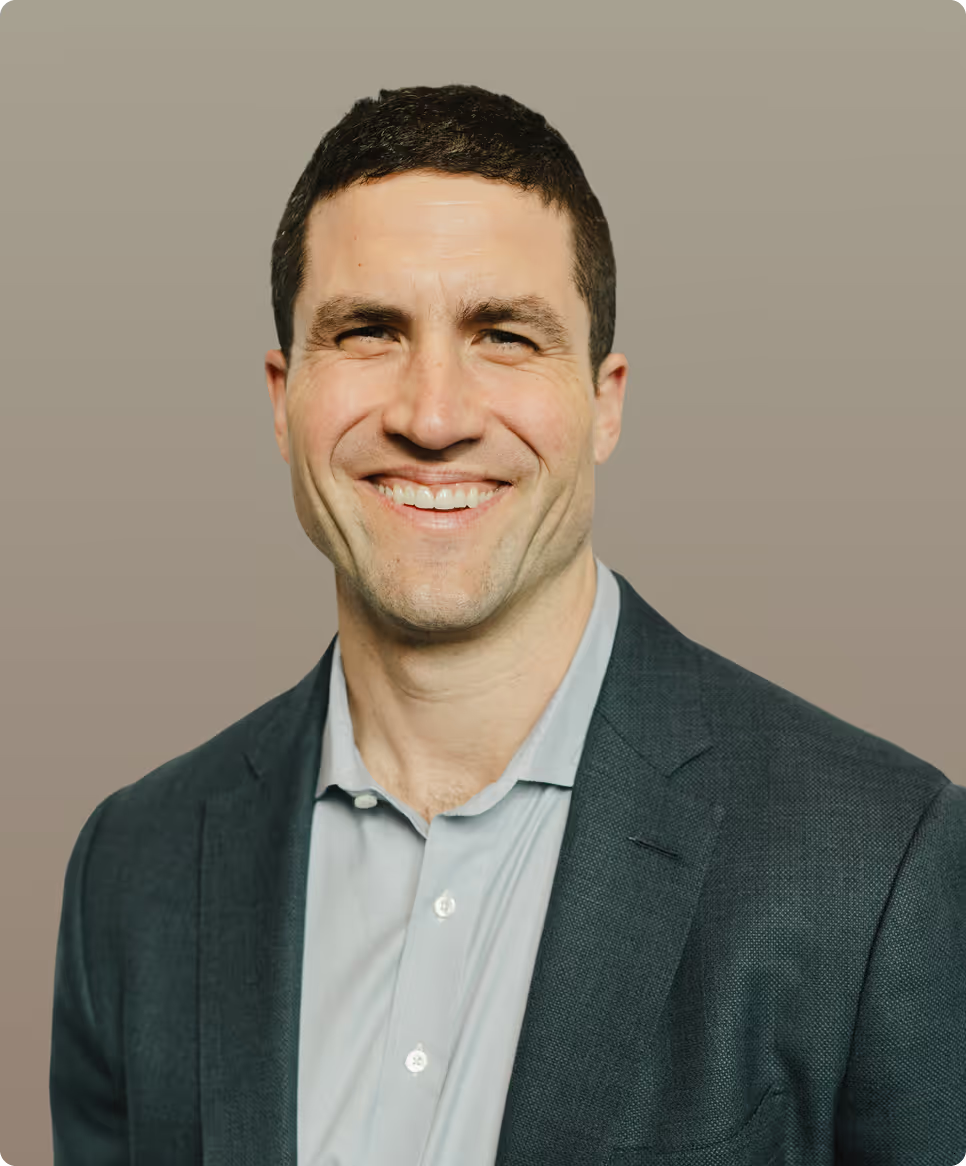
Alfred Johnson is co-founder and CEO of Crux, the capital platform for the clean economy. Before founding Crux, Alfred served as Deputy Chief of Staff to Secretary Janet Yellen at the US Department of the Treasury. Earlier in his career, Alfred was Vice President in Financial Markets Advisory at BlackRock, Senior Advisor for Financial Markets at the US Treasury, and Special Assistant to the White House Chief of Staff.


Share