
Inside Intersect’s behind-the-meter gamble
Follow on


Share


About the episode
When the behind-the-meter power generation company Intersect launched a decade ago, the playbook for setting up renewable generation was pretty straightforward: secure power purchase agreements with your customers, then build your generation.
But Intersect took a different -- and far riskier – path. They built generation infrastructure before anyone signed up to buy it. Without buyers, the company would have sunk. But a spike in U.S. energy demands fueled by massive data centers put Intersect in the perfect spot. It had a product nobody else had: immediately deployable power.
Intersect built 14 generation projects, and this spring, Alphabet bought the company for nearly $5 billion. (The deal did not include operable projects, only those in development).
In this episode, Alfred sits down with Sheldon Kimber, founder and CEO of Intersect, to unpack the financial frameworks and market insights that drove both Intersect’s growth and their remarkable acquisition by Alphabet. They explore why Intersect’s merchant approach proved so effective, how "bring your own power" is becoming the gold standard for data center development, and why the future grid will rely on a "flywheel" of renewables, batteries, and gas.
Have feedback on Critical Capital? Fill out our listener survey to let us know what topics and guests you’d like to hear next!
Critical Capital is a co-production of Crux and Latitude Studios. Learn more about how Crux is financing the future of energy.
Episode transcript
Sheldon Kimber: We knew how to build companies that build projects, but the strategy part of, "Do we really want to go in and just grind it out — get the lowest-price PPA, go get the lowest-price Chinese modules, flip it to a pension fund, clip a coupon, and do it again?" That just felt like it was running out of steam as a business model, and it was also super boring and required almost no real insight as to the future of the power grid. Nor was it, in some cases, a very good idea for the future of the power grid, as we've seen.
Alfred Johnson: These days, everybody is talking about energy demand. It's one of the things that we talk about most on this show. And hyperscalers are in the center of that conversation. They are scrambling to secure power for AI data centers, but the playbook for procuring that energy is changing really quickly.
Traditionally, when they're looking for power, a company will lock in a power purchase agreement with a producer, usually for 10 years or more, and they're off to the races. But today, that strategy doesn't always work.
In today's episode, we're taking a deep dive into a company that found huge success by placing a big bet on themselves, on a path to powering data centers. Instead of building a business around PPAs, Intersect went merchant. What that means is they built massive power generation facilities before lining up off-takers. It was a very non-consensus choice at the time. But when it worked, the payoff was huge. AI growth exploded, and Intersect was able to offer immediately deployable energy to large loads, including data centers.
This spring, Alphabet acquired the company for nearly $5 billion.
Sheldon Kimber: We really bet on the fact that load would have to come to places with a lot of clean energy and, increasingly, an overlap of enough gas to firm that clean energy. So those mega projects that were wind, solar, batteries, gas, and largely off-grid are the core of what Google bought and what we're building right now.
Alfred Johnson: This is Critical Capital. I'm Alfred Johnson, the CEO of Crux. We're the capital platform for clean and critical infrastructure. My guest today is Sheldon Kimber, the founder and CEO of Intersect.
Sheldon brings a singular perspective to the conversation about power. Before he started Intersect in 2016, he financed and developed gas plants for Calpine and scaled the solar and battery developer Recurrent from a startup into a multi-gigawatt developer. He also spent a decade teaching project finance at UC Berkeley's Haas School of Business.
Sheldon brought all of that experience to Intersect, which is now a massive operation, delivering more than 11 gigawatts of clean energy capacity.
To be clear, as part of its agreement with Alphabet, Intersect's existing assets will continue to operate independently, but Intersect also has more sites in development. That's what Alphabet bought.
As you'll hear in our conversation, Sheldon has a lot to say about the future of gas and renewables, why the merchant model worked for Intersect, the misconceptions he sees around data center resource usage, and a lot more.
And one last thing: we're already getting towards the end of the first season of this show. We really want to hear from you. If you have feedback on Critical Capital, please fill out the listener survey in the show notes and let us know what topics and guests you'd like to hear from next.
Now, here's Sheldon.
Alfred Johnson: Sheldon Kimber, welcome to Critical Capital.
Sheldon Kimber: Thanks for having me.
Alfred Johnson: You used to be a lecturer at Berkeley's Haas School. What is one lesson that you brought forward into Intersect, and what is one lesson that you taught your students that you broke at Intersect, and why?
Sheldon Kimber: Wow, okay. I used to have this thing where I was like, there's the conservation of risk, right? Which is: project finance and structured finance in general is almost always about bounding, mitigating, allocating risk. But it's very, very rare that you can actually eliminate risk. And so really, it's just an exercise in putting it somewhere, or containing it and then pricing it.
I like to take things up to a theoretical level, so when I taught project finance, that was where I started. And then, obviously, you went into learning how to do the models and whatnot.
Things that we've violated at Intersect: I'm a pretty pedantic and a little bit — well, quite a lot — OCD guy. So I have these ways of doing things. My team will tell you, I've never made them read a management book or anything. I just have these three or four frameworks that are no more than three bullet points apiece, like, "If you want me to make a decision, always show me risk, return, and liquidity before and after that decision, and I'll give you an answer."
Alfred Johnson: What's the framework that you have used that has driven a big decision?
Sheldon Kimber: When we look at procurement decisions, for instance, some of the biggest differentiating decisions we made at Intersect — and I think we're going to talk about some of them — around whether we decided to contract all of our output versus some of the merchant exposure we took, and how we bought equipment well in advance of projects being ready to build. All of those were on that framework of risk, return, and liquidity, right?
If you just look at each project, you can see that, "Hey, I wouldn't buy panels or a transformer for that project or whatever it is without an off-take," without basically securing the return, right? So then I know the risk-adjusted return on all of that.
And there's a liquidity impact, obviously. Where is that capital coming from? What's the cost of that capital relative to the risk-adjusted return? Are you taking 30% money from private equity to invest it in a low-risk, low-yield return, right?
And so when we chose to buy equipment forward ahead of a lot of our projects, you really had to point to something else, some other value that you were creating, right? Because that equipment was for stuff that returned, whatever, 12–14% leveraged returns, and we were taking money that was private equity that was probably priced above that.
And so you had to be creating return that was greater, and the way you did that was you grew faster, right? So the platform was greater than the sum of its parts. We were creating a series of investments that had a return of 12% to 14%, but we were doing it at such a pace that the enterprise had a growth multiple, if you will — a growth premium on our multiple — and that was what was justifying the private equity investment. And obviously, you can see that in the way we exited, right? Where the whole platform itself, because of not just the things it created, but the machine that made it, was valued well beyond the actual components, right?
So that comes from decisions we made around our procurement strategy, all of which were really thoughtful about: What is the risk on this decision or this capital we're taking? What return are we actually getting, and what return do we have to get to match the source of our liquidity? That's a fairly elaborate one, but that's how we're thinking about it.
Alfred Johnson: Yeah, a million small decisions that all run through discernible frameworks. And what you've done in building this is you've built a beautiful machine, but you haven't done it in very many years. You did it quickly. So for the listeners here, describe what Intersect is.
Sheldon Kimber: At Intersect, we start from the very beginning. We pride ourselves on being largely what I'll call a "tip of the spear" greenfield developer, right? We start with raw dirt. We very rarely buy other people's early-stage projects. A lot of other folks buy from the "two guys in a truck" land developer. We start pretty much from a clean slate. We develop, we entitle, we engineer, we design, we procure equipment, finance, construct, own, and operate power plants. We've done that for many, many years from the prior company we were at together into now.
A lot of our focus now, prior to the acquisition by Google, was really on being focused behind-the-meter or this "bring your own generation," co-located load and generation, either on the grid or mostly off the grid, where we really bet on the fact that load would have to come to places with a lot of clean energy and, increasingly, an overlap of enough gas to firm that clean energy.
So those mega projects that were wind, solar, batteries, gas hybrids that were largely off-grid are the core of what Google bought and what we're building right now.
Alfred Johnson: And talk to me about site selection. So you now have 14 operational projects, I believe. How do you think about where to put them?
Sheldon Kimber: So actually, in the acquisition, we spun off a bunch of our operational assets into a company called IPX. And that hurt a lot because it wasn't so much the assets, although I do have a deep emotional attachment to the assets...
Alfred Johnson: A lot of blood, sweat, and tears, and frameworks in those assets.
Sheldon Kimber: Yeah, exactly. A lot of risk-return and actually quite a bit of liquidity in those assets. But more so just the people. There was a group of folks that stayed and a group of folks that went with the assets, and so that was painful.
But when we think about where to put assets, it really depends on what the product is, right? So we have a platform that is designed around the conveyor belt of development, right? It's got a development, permitting, and siting team that sits here, then engineering, procurement, finance, construction, operations. And so it's a passing of the torch between these organizations.
But before we ever get there, we have a strategy and business development group, and they design what the new product is, right? And so these mega wind, solar, battery, gas hybrids that were largely off-grid, they came out of this realization that there was so much energy in many places in the country at the wrong place, wrong time, and there was increasingly an underinvestment in the grid, so large loads would come to that.
So we had these realizations on the strategy side, and then those get turned into a thesis that then gets turned into a siting map. And so you're just then overlaying on your GIS system: Where's all the gas? Where's all the good wind? Where's all the good solar? And so you've got this thesis, and then you're just basically implementing a map of layers that give you a heat map of all the great places to do that strategy.
Alfred Johnson: How has community support or resistance influenced where you site projects?
Sheldon Kimber: Intersect has been very intentional about where we go. We have, I think, never really gone into a community and fought our way through a permitting hearing. There have been places where you obviously have folks — not everybody wants you there — but I think in almost every case, we've had pretty overwhelming support in whatever hearings and permitting processes we go to, and most of the community has seen a real benefit from what we brought.
So we don't tend to have the "put your head down and plow through it" approach. In fact, we kill projects really early in their lifecycle. That's one thing we're very proud of. We're almost more proud of the projects we haven't done in some cases, because in order to get that growth premium, again, we designed the company very intentionally — from our procurement strategy to the capital we took from growth, not infra capital, right down to the scalability and the "kill early, kill often" of the projects: small team, big projects, not a lot of them.
That whole thing was about growth and scalability. And the renewable industry gets caught up in this, like, "I picked a site, it was a really good wind site. The community didn't want me there, but I put my head down and I barreled through it. The tax credits were really complicated, but I got it done." And they pride themselves on these things that are totally unscalable business concepts that they get done, but it winds up being more a testament to our willingness to endure pain than our ability to build high-growth, enduring businesses.
Alfred Johnson: Yeah, it's a really interesting point. I have been struck by how much the conversation has changed around data centers. We all are. I've been thinking a lot this week about how I used to drive to play golf with my dad at this place out in Manassas, Virginia, and we would drive past all these data centers on the way there, and I couldn't think of anything more boring than a data center, right? And now it's at the tip of everybody's tongue, and there's a lot of information, misinformation, feelings about data centers and where they're being sited.
I have heard you talk about how people sometimes get wrong what the implications are to electricity rates in communities. How do you see that with "bring your own generation" as something that communities should be considering when they're thinking about whether or not they want a data center nearby?
Sheldon Kimber: We've been involved pretty deeply in this effort to articulate what Google and we believe is infrastructure and data centers done right, right? How do we think about that?
First of all, come in transparent, right? Meet communities with transparency and honesty about who you are, what you're doing, how you're going to show up and be a member of that community, right? We're not doing something in a community or to a community — we want to join the community and be part of it. So that begins with transparency.
Bring your own power, which, if you look at Google and the transaction they did to buy us, that was the whole point, right? Our whole model is "bring your own power." So that's that one, check.
Water: dry cooling and using all efforts to mitigate any water use. That's the one where I feel like there are the biggest outright lies in the social media world, because you can absolutely contain your water usage, right, with your choice of technologies. And so there's just a whole lot of misinformation around the water world.
So transparency, bring your own power, don't use the community's water. Do basic things: noise, light, traffic abatement. And then really make an investment in the community. And that's not just through your tax dollars, which are obviously huge, even with some of the tax abatements. You're still contributing an enormous amount of money to the revenue of the schools and the hospital districts and others, creating good-paying jobs.
But really, most importantly, creating some sort of funding mechanism that allows community benefit. We've done endowments with community foundations, and then letting the community guide that, right? So many developers come in and they try to tell people what's good for them, and we don't do that. We set up ways in which the community can allocate their own funds and their own benefit from the infrastructure.
So all that is to say that the data center backlash doesn't make a lot of sense to me. These are things that can absolutely be done right, and done in a way that benefits everybody in a community. I think it's been over-politicized, and it's just being manipulated.
Alfred Johnson: Yeah, Sheldon, part of the reason why I spend so much time here is it begins to elucidate this really interesting strategic choice that you made early in the history of the company, where now it's just taken for granted that all these data centers were going to come and they were going to present an amount of demand that we had never seen before in the history of the country. But when you started Intersect, that was not necessarily obvious, right?
And you started with a particular thesis, which is that you would build the assets and then find the demand. Talk about the strategy of going merchant in the first instance, and why that was so revolutionary at the time.
Sheldon Kimber: Intersect's day-one business plan was definitely higher-risk, higher-growth, based on much more — I'd say fundamental insights, what we felt were fundamental insights — about the future of the electric power sector, particularly renewables, right? That was the goal: to write something really landmark in the business plan and then go do it.
We had already — I'd been a part of Calpine, I'd helped build Recurrent. We had all the scars, and we knew how to build companies that build projects, but the strategy part of, "Do we really want to go in and just grind it out — get the lowest-price PPA, go get the lowest-price Chinese modules, flip it to a pension fund in a record-low interest rate environment, clip a coupon, and do it again?" That just felt like it was running out of steam as a business model, and it was also super boring and required almost no real insight as to the future of the power grid. Nor was it, in some cases, a very good idea for the future of the power grid, as we've seen.
So we wanted to put together a vision for what the future we thought would occur is, and then make some bets on it, right? Which is something that a lot of people don't do in this sector.
So we did that in two ways. One was this piece around the large data centers play, which was around: there's so much power at the wrong place, the wrong time, somebody must do something with it, right? And that was in the original business plan, and then I wrote a big blog that we called "The Nexus of Deep Decarbonization," which was a very Joe Biden-era title, but it still holds true. The insights and the thesis economically that we put there, I think, was in fact why Google bought us in the end. But...
Alfred Johnson: It aged much better than Waterworld.
Sheldon Kimber: It aged, yes! Our thesis on that piece has aged far better than Waterworld.
I think on the second piece that we staked out, which was again this belief that long-term PPAs at the price points that were prevalent in the marketplace when we started Intersect in 2016–19 were destroying value. And what we saw in that was people were signing PPAs — 20 bucks a megawatt-hour, right? And all they were really doing was locking in the fact that they would never make any money. So just day one, you would never make any money.
Because people were still betting on these massive declines in CAPEX that weren't really happening anymore. And so you were just giving up all the developer profit and working for someone else, because at best, maybe you could get a leveraged 8% or something at the time, and maybe you'd sell down for 7.5% to a pension fund. There just wasn't a lot of developer profit in these deals.
And so what we went and looked at was, if you took a project that had been contracted at 20 bucks and you took a project that just let the merchant curve ride, and then you took a 50% haircut to the merchant curve, what was the expected return? And what you found was that even if you cut the merchant curve in half, you were still better off just not contracting anything than signing contracts at the prices that were prevalent at the time.
So from a risk-adjusted return perspective, there was no reason to sign a PPA given the state of the market back then, in terms of what the projects cost to build and how much revenue you could get out of them. Now, that has changed dramatically, right? So people often look at me and view me as a big proponent of merchant. I'm not. I just know that it's a tool that allows you to build a high-growth business, deploying capital in power in an accretive way from a risk-adjusted return basis, right?
So I wouldn't do that today because I can go sign PPAs at much higher rates with much higher returns.
Alfred Johnson: Yeah. So you saw the market opportunity at the time. It was high risk; it ended up being very high return. To put your framework back at you, you had no liquidity at the beginning of the business, and this was probably something that banks looked at with a little bit of uncertainty. How did you raise the early capital? How did you get lenders comfortable with the approach?
Sheldon Kimber: I think that was probably the hardest piece we had to do. The hardest deal I've ever done in my life was a deal that we called Proxima. And there were a handful of people involved in that deal who — I think it almost killed many of us. And these were not people who are easy to kill, let's put it that way.
But basically, we combined the first set of projects into a portfolio, so some of them were more contracted than others. So you had a lot of coverage and diversification across Texas and California merchant curves. And so we were able to — it didn't quite have as much leverage on a percentage of cost basis as a fully contracted asset might — but it came together into a deal that could get done.
I will tell you that I think if you look back at those assets, for the first few years of their lives, they had a really good couple of years. It's been a really crummy couple of years, which is strange given how PPAs are off the charts, right? Power is off the charts, but the spot markets aren't really keeping up, and we can talk at length about that. That's a really interesting topic.
Alfred Johnson: Is that mostly batteries? Batteries coming onto the grid and stabilizing it?
Sheldon Kimber: Yeah, there's also some, I think, practices by market regulators and other folks that are changing the way that the day-ahead versus real-time winds up coming in. And so you wind up with a lot less volatility in the spot. Now, that winds up being a bit of a shadow capacity market, where you tamp down volatility in the spot market, which means you don't get headline risk, but overall consumers are paying more, right? Because they're probably paying more on the non-spot pieces.
And so there's stuff like that. There's some elements like RA policy and capacity policy and RECs that are causing some perverse incentives between the utilities to bid down prices in the summer peaks on solar and that. So there's some weird market dynamics involved, but in addition to that, it's just an overbuild of batteries and particularly solar in the midday that's there.
I do think, though, that by tamping down a lot of that responsiveness of markets and being really hyper-political about it, you're not giving a lot of incentives to batteries or new gas or some other form of generation that could firm. And so I do think that you're borrowing from the future if you're a regulator or market operator, because you need those resources to have incentives to come online.
Alfred Johnson: Okay, so bringing us to the near present: you built this company, you sold it to Alphabet for $4.75 billion. To the extent that you can, bring us into that room when you sold the company, and what did it feel like?
Sheldon Kimber: We had been working on some of these assets with them already. I think they had gotten to a point where they saw that these assets were pretty unique. People had started to talk about these large wind, solar, gas, battery, off-grid monster, multiple-gigawatt data center — which means they're 4, 5, 6 gigawatts of renewables, you can imagine — but we had gotten started so much earlier because of our insight that I think Google saw that it was coming together faster.
And so I think they saw the opportunity as, "Hey, we're going to make this company by going and doing these two or three deals in this partnership. We can just buy the company for maybe about the same, so why don't we go do that, right?" And so I think there was some of that.
For us, Google's one of the few companies I would have sold to. Culturally, it's a great match. When we're now in this issue of community engagement and data centers done right and all of that, there's nobody I'd rather be part of than Google because we're so aligned on all of that.
The technical integration that it requires — so many people are walking around going, "I've got this big wind, solar, battery, gas thing," and I'm like, "Yeah, that looks really familiar from six years ago when we started talking about it." But they're like, "Please put your data center here." And it's like, you guys don't even understand — the degree of integration that Google and now Google Intersect can do together is unbelievable. There are things we can do that no third-party developer bringing us a piece-of-dirt solution could do for us in that configuration.
I'm a real stickler for the numbers. And when I looked at the numbers on a risk-adjusted basis, we can do the math, and I've watched so many people blow up in this industry, right? It's just littered with people who thought they were untouchable, and this was a great exit, so we took it.
Alfred Johnson: You've been willing to take positions that other people in the industry haven't necessarily been willing to take. And one of those that you took pretty early as an entrepreneur who has built a ton in solar and battery is that gas has a role to play as part of the complexes, too. Talk a little bit about how you think the industry gets that right or gets that wrong with respect to the mix of power.
Sheldon Kimber: Well, I wrote a blog in 2012 that was like "Frenemies" — how gas and solar in particular need to get along. At the time, batteries weren't really relevant because they weren't very good.
And so it's really all about how people look at gas in two ways. One, people look at gas in the wrong way, which is a lot of folks haven't really gotten the message that wind and solar, when the wind is blowing and the sun is shining, are the cheapest forms of energy you can possibly get. Now, notice I said the word energy. They are not the cheapest forms of capacity, right? They are intermittent energy sources; we should take them when we can get them.
But then what does that mean? It means that you have to firm them up with the cheapest form of capacity, right? And if the sum of those two parts — the firming capacity and the cheap energy — is then cheaper than whatever it is, nuclear fusion, all the next-gen things to come, that's pretty compelling, because those are technologies that are here today, right on the ground.
And so this has only gotten to be a stronger and stronger thesis as wind and solar have gotten cheaper. There's effectively, if you look at it — the future of the energy business will be defined by a whole lot of things, but one of the core dynamics of it will be this: solar and renewables and the tax credit that used to be in place for them that drove the cost down, and Chinese manufacturing, all the things that drove the cost down — that declining cost actually turned out to be the greatest possible incentive for batteries ever, because it basically created the market value of batteries.
So now we're in a world where I don't think anybody would dispute that batteries get more and more valuable the cheaper solar and wind get, and the more batteries you build, the more solar and wind can get integrated to the system, which brings them further down the cost curve. And it's just this flywheel effect, right?
Now take the flywheel and put three different points on the wheel. The more you get very low CAPEX — forget even the efficiency, just very low CAPEX — firming capacity from a gas generator, the more that whole flywheel gets even better, right? Because now you basically enable more and more solar and wind to get on the grid, which enables more and more batteries to get on the grid.
And so you've got this virtuous cycle where high heat rate, low CAPEX gas that has a particularly, probably, shorter life, maybe it's more modular, a whole lot of things that make it more flexible and interesting to invest in, plus renewables, plus batteries — some mix of that will define the next foreseeable future until we come up with something truly revolutionary.
And what's even funnier about it is that most people don't yet get that it will also obviate the need for and keep from happening a lot of these new revolutionary things. Because every time you invest in a next-gen technology — and I like some of these tech, don't get me wrong. I like nukes, I like all of it. But all of that will have to basically compete against what I just laid out. And when you think about it, that's like a one-way bet against battery storage. Would you take that bet?
Alfred Johnson: No, definitely not. Based on what we see in the market right now, it's doubling every year. Which makes me curious as to how you think the "frenemy" dynamic shifts as more and more batteries come onto the grid. Is that a necessary reality, or do you see it changing?
Sheldon Kimber: You'd need to see cost changes that are really, truly massive for it to get to 100%, right? And at the end of the day, people do want a very reliable grid. People aren't willing to tolerate a low level of reliability in the electric power sector.
So I do think there's always going to be a role for gas machines, even if they don't fire up that much, to be in the system. And what's funny is you've effectively got the intermittency that renewables bring to the power grid now collapsing into the gas system. Now this is something I've started to talk about just recently, and I find this fascinating to watch.
But what's basically happening is the value of capacity in electric power markets is getting so valuable now that you're getting very high returns to even inefficient, low CAPEX machines that can firm it. You're increasingly going to see higher returns to a gas system that can deliver gas quickly, and not necessarily continuously, right?
So I'm not a gas expert, but I'm going from conversations I've had, which are: you're going to see a return to expansion of gas storage, pipes that can move gas more quickly when it's needed — like in a time when the wind doesn't blow and the sun doesn't shine in California and it's cold, you can't cram enough gas through that pipe quickly enough to spark all the thermal generators, right? You're going to see a gas system that evolves to absorb and backstop a lot of the intermittency of the evolving power grid. I think that's fascinating, right?
And what I'm even more interested in is, what does that capacity look like when you then pass the value, not just through the midstream, but is there value in the upstream? Are there ways in which people will now pay for more like call options on capacity for the molecule versus actually wanting to burn it? You might just need to be able to burn it exactly when you need it, right? Are we now creating an energy system where capacity is the value of the day and it ripples through the entire value chain?
Alfred Johnson: Yeah, I've heard you use the analogy of the plug-in hybrid for what you guys built at Intersect before, and I think there's an interesting analogy there where we have seen EVs take a ton of market share, but also in some circumstances, the plug-in hybrid is just preferred by consumers. And so if that's the case, then what are the financial and market realities that need to exist in order to accommodate a system like that? And I think to your point, it requires diversity and financial development of some of the underlying components that's just different from what we have today.
Sheldon Kimber: Yeah, I think what I'm interested in is — a lot of the innovations we're perfecting, and now others who have been fast followers to some of the stuff we've been doing for a while, are perfecting in microgrids, and working with new providers of power electronics, and how we're figuring out these off-grid "EREV" power plants, right? The electric vehicle with the kicker gas motor, as they call it.
The technologies we're evolving there, I'm very excited to see those then rolled out onto the power grid, because I think that's going to be a fascinating world where what we're defining behind the meter is the future of the power grid.
Alfred Johnson: Yeah, so we talked about this reality of the market when you started Intersect, where it was not obvious that merchant was the way to go, it was not obvious data centers would come on at the scale that they did, and now it is so obvious that that was the correct business model. What do you think will be obvious to us in 5 years that isn't obvious today?
Sheldon Kimber: Really, I think it is about this flywheel effect of renewables plus batteries. It's unstoppable. It truly is unstoppable, and it's going to impact the gas generation plug that's there.
And so people that figure out what the optimal gas generator is to play that role, what the optimal gas delivery system is to backstop and provide that on-demand capacity — these are going to be big changes in the energy system, I think.
And I'm excited to see how that plays out, because it's a way in which I think data centers, even off-grid, even when you totally separate them, that gas system will be the linkage between the power grid that serves the data centers and the power grid that serves consumers. And I actually think there may be ways in which data centers have positive effects on that system that make it more flexible and able to enable the power grid of the future for consumers.
Alfred Johnson: We started with how you educated the bright young minds of project finance, the ideas that you brought into Intersect and the ones that you didn't. Mostly, you brought in a lot of things that worked. We are proud to be a very small company that you have invested in early in the journey of Crux that did a lot for us in our early days, and I'm grateful to you for joining Critical Capital. Thank you, Sheldon.
Sheldon Kimber: Yeah, thanks for having me, and congratulations on all you guys have accomplished and the business you've built. I'm super proud to have been a small part at the very beginning. So thank you.
Alfred Johnson: That was Sheldon Kimber, the founder and CEO of Intersect.
Critical Capital is a co-production of Crux and Latitude Studios. Our production team includes Max Savage Levenson, Jenna Herzog, Anne Bailey, Stephen Lacey, and Sean Marquand. Matthew Filler mixes the show. Additional production by Emily Hughes and the excellent team at Crux, the capital platform for clean and critical infrastructure.
You can find Critical Capital on Spotify, Apple, or wherever you get your podcasts.
And as I mentioned at the top of the show, we're getting close to the end of our first season of Critical Capital, and we'd love to hear from you. If you have feedback for us, good or bad, please fill out our listener survey in the show notes and let us know the topics and guests you'd like to hear from next.
I'm Alfred Johnson. Thanks for listening.
Want to explore more conversations like this?
Browse all episodes
Hosted by
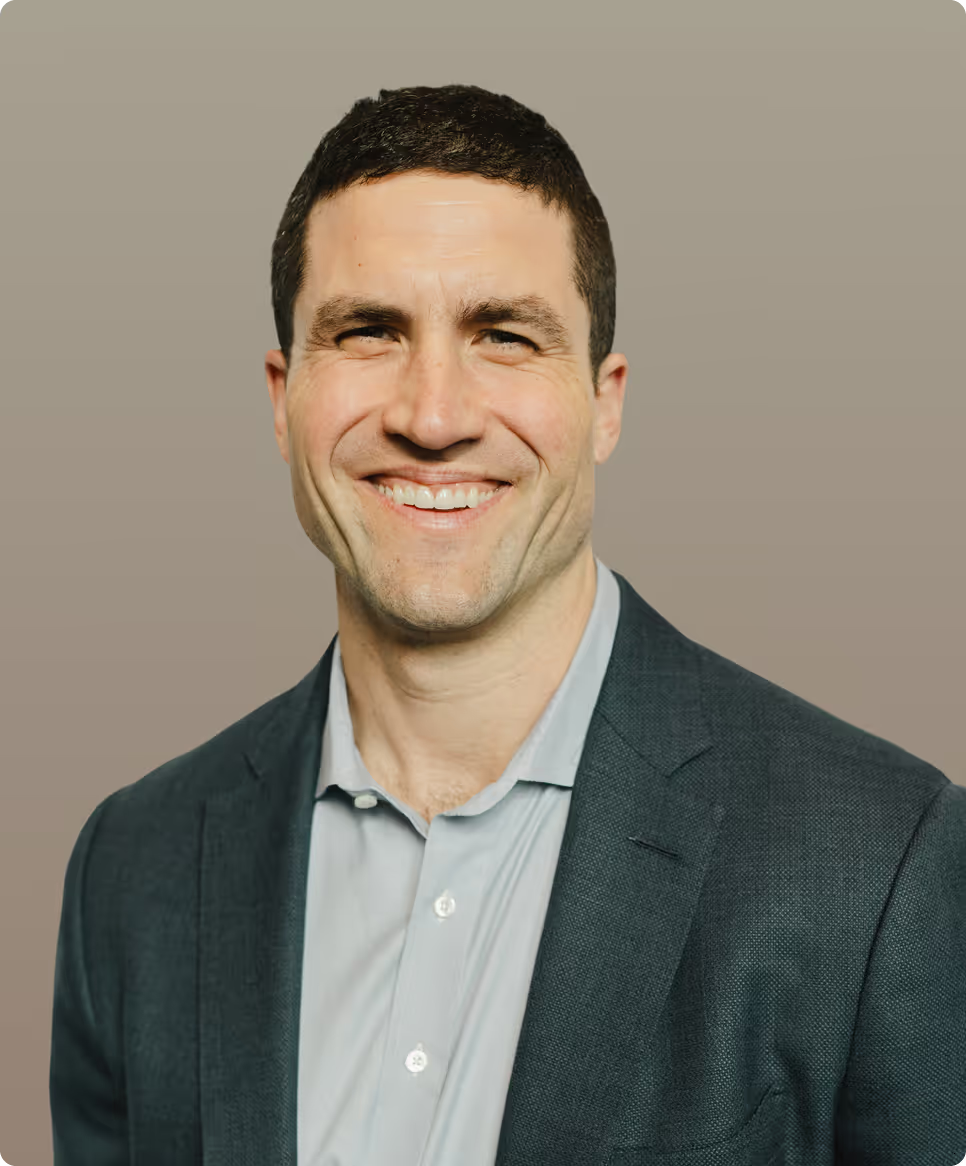
Alfred Johnson is co-founder and CEO of Crux, the capital platform for the clean economy. Before founding Crux, Alfred served as Deputy Chief of Staff to Secretary Janet Yellen at the US Department of the Treasury. Earlier in his career, Alfred was Vice President in Financial Markets Advisory at BlackRock, Senior Advisor for Financial Markets at the US Treasury, and Special Assistant to the White House Chief of Staff.


Share